
How Much Does Baseboard Installation Cost? A Central Florida Guide
· By Marcos De Souza
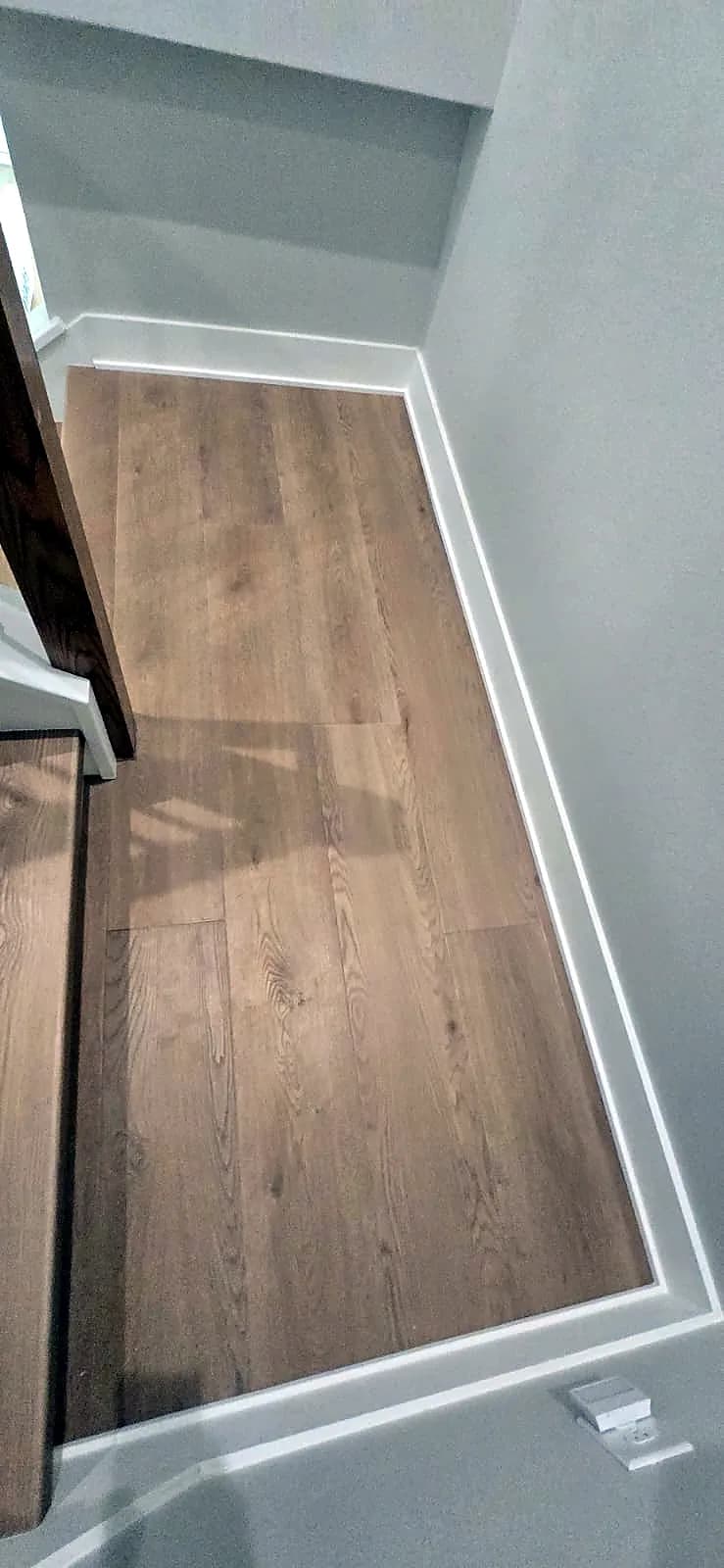
Baseboard installation cost is one of those numbers homeowners want a straight answer on before they call anyone, and it is also one of the easiest line items to get wrong when quoting it over the phone. The real figure depends on the room, the material, the condition of the walls, and whether the baseboards are going in next to brand new flooring or getting swapped out on their own.
Around Orlando, Winter Garden, and the rest of Central Florida, humidity and concrete slab construction add a wrinkle most national cost guides skip over. This guide breaks down typical per linear foot ranges, what pushes the price up or down, and how material choice (MDF, solid wood, or PVC) plays out in a humid climate. Treat every number here as a starting point for the conversation, not a quote. The only way to know the real cost for a specific home is a walkthrough and an in-person estimate.
What Baseboard Installation Typically Costs Per Linear Foot
Most homeowners in Central Florida see roughly $3 to $8 per linear foot for baseboard installation, including the material and labor, though the number moves depending on profile height, material, and how many corners, doorways, and obstacles the installer has to cut around. A simple room with long, uninterrupted walls sits at the lower end of that range. A room full of closets, built-ins, and tight corners pushes toward the higher end, since every cut and miter joint adds time.
Paint-grade MDF baseboard on the lower end and taller, more detailed profiles or solid wood on the upper end is a reasonable way to think about the spread. A typical bedroom or living room run (one with a handful of corners, nothing unusual) often lands somewhere in the low hundreds of dollars total, while a full-house baseboard replacement across several rooms adds up accordingly.
None of this replaces an actual quote. Wall condition, ceiling height, trim style, and whether old baseboard needs to be removed and patched first all shift the final number. The most reliable way to get a figure that applies to a specific home is to request an estimate and have someone walk the rooms in person.
What Drives the Price Up or Down
Linear footage is the starting point, but a few other factors do most of the work in moving a baseboard installation quote higher or lower. Removal and disposal of old baseboard adds time, especially if it was glued or nailed into drywall that needs patching afterward. Walls that are out of square or uneven (common in older homes around Winter Park and College Park) can require extra scribing and caulking to get a clean, tight fit.
Profile height and style matter too. A tall, multi-step baseboard profile takes longer to cut and install than a simple 3-inch flat profile, and it usually costs more per foot in material alone. Rooms with lots of doorways, closets, and built-in cabinetry also mean more cuts and corners, which adds labor time even if the total linear footage is modest.
Finally, whether the baseboard needs to be primed and painted on site, or arrives pre-finished, changes the price. Pre-primed MDF still needs caulking and a finish coat of paint after installation for a clean look, and that finishing step is often priced separately from the install itself.
MDF vs Solid Wood vs PVC Baseboard in Humid Florida Homes
Material choice matters more in Central Florida than it does in a drier climate, because humidity and the occasional slow leak are facts of life here. Paint-grade MDF (medium-density fiberboard) is the most common and budget-friendly option, and it paints up smooth and straight. The tradeoff is that MDF will swell or soften if it stays wet for an extended period, so it is a better fit for living areas than for bathrooms or spots right next to exterior doors that see rain splash.
Solid wood baseboard holds up to occasional moisture better than MDF and has a traditional look that many homeowners want in older homes, but it costs more and can still warp if conditions stay damp for a long stretch. It is a solid choice for most rooms as long as humidity indoors is kept in check.
PVC or cellular composite baseboard is fully waterproof and will not swell, rot, or absorb humidity, which makes it worth considering in bathrooms, laundry rooms, kitchens, and any room where moisture is a regular visitor. It costs more upfront than MDF but removes the moisture risk entirely. For most bedrooms, living rooms, and hallways in a typical Central Florida home, MDF or solid wood is perfectly fine; PVC earns its keep in the rooms that see the most water.
Replacing Baseboards Together With New Flooring vs Reusing the Old Ones
When a home is getting new hardwood, vinyl plank, or laminate flooring, the baseboard question comes up almost every time: replace it along with the floor, or pull the existing baseboard carefully and reinstall it afterward? Reusing baseboard can save money if it is in good shape, but it rarely comes off the wall undamaged, and any gap left by a change in flooring thickness has to be patched or covered with quarter round.
Replacing baseboard at the same time as the floor is usually the cleaner result. The installer can set the new baseboard to the exact height of the new flooring, caulk a tight seam, and avoid the touch-up paint and patchwork that comes with trying to save and reinstall old trim. It also means one less thing to coordinate if the baseboard was damaged, warped, or outdated to begin with.
For a straightforward swap (laminate for laminate, for example, at the same thickness) reusing the baseboard is sometimes realistic. For anything that changes the floor height meaningfully, like going from carpet to hardwood or adding a self-leveling compound over a concrete subfloor, new baseboard tends to be the more practical call.
Quarter Round: What It Is and When You Need It
Quarter round is the small, rounded strip of trim installed where the baseboard meets the floor, and it shows up most often with floating floors like laminate and vinyl plank that need a small expansion gap along the walls. The quarter round covers that gap without pinning the floor down, which lets it expand and contract with temperature and humidity changes.
Not every flooring type needs it. Glued-down or nailed hardwood typically does not require quarter round because the baseboard itself can sit tight to the floor. Floating floors generally do need it, or at least benefit from it, for a finished look and to hide the expansion gap. It is a small cost compared to the baseboard itself, usually priced per linear foot alongside it.
Caulk, Paint, and the Finishing Touches
Caulking the top seam between baseboard and wall, and the joints between pieces, is what gives baseboard its clean, finished look rather than a visible gap. It also helps block dust and, to a lesser extent, moisture from working into the seam over time, which matters in a humid climate.
Paint-grade baseboard needs a finish coat after caulking, even if it arrives pre-primed from the factory, since nail holes, caulk lines, and any scuffs from installation need to be covered. This step is sometimes quoted separately from the baseboard installation itself, so it is worth asking whether a quote includes paint or just the material and labor to hang the trim.
Getting an Accurate Number for a Specific Home
Every range in this guide is meant as a starting point for the conversation, not a quote for a specific house. The real number depends on total linear footage, wall condition, material choice, whether old baseboard needs to come out first, and whether the work is happening alongside a flooring project or on its own.
The most reliable way to get an accurate figure is to request an estimate and have someone measure the rooms in person. That walkthrough is also the right time to ask about MDF versus solid wood versus PVC for specific rooms, especially bathrooms, laundry rooms, and any space near exterior doors where moisture is more of a factor.
Frequently asked questions
- How much does baseboard installation cost per linear foot?
- Most homeowners in Central Florida see roughly $3 to $8 per linear foot for baseboard installation, including material and labor, depending on profile style, material choice, and how many corners and doorways the room has. An in-person estimate is the only way to get a number specific to a given room.
- Should I replace my baseboards when I install new flooring?
- In most cases, yes. Replacing baseboard at the same time as new flooring lets the installer match the height exactly and caulk a tight seam, rather than trying to save and reinstall old trim that may not sit right against a different floor thickness. Reusing baseboard can work for simple swaps where the floor height does not change much.
- What is the best baseboard material for a humid Florida home?
- Paint-grade MDF and solid wood work fine in most living areas, bedrooms, and hallways. For bathrooms, laundry rooms, and any space that sees regular moisture, PVC or cellular composite baseboard is worth the extra cost because it will not swell or soften from humidity the way MDF can over time.
- Do I need quarter round with my new flooring?
- Floating floors like laminate and vinyl plank generally need an expansion gap along the walls, and quarter round covers that gap while still letting the floor move with temperature and humidity changes. Glued-down or nailed hardwood typically does not require it since the baseboard can sit tight against the floor.
- Is baseboard installation priced separately from painting?
- Often, yes. Hanging and caulking the baseboard is one step, and priming or painting it is frequently quoted as a separate finishing step, even on baseboard that comes pre-primed. It is worth confirming whether a given estimate includes the paint or just the material and installation.
Found this helpful? Make us a preferred source on Google.
Ready for an exact price?
Tell us about your floors or the space you need cleaned and we will get back to you with an estimate.