Engineered Hardwood Installation vs. Solid Hardwood: What Works Best in Florida Homes
· By Marcos De Souza
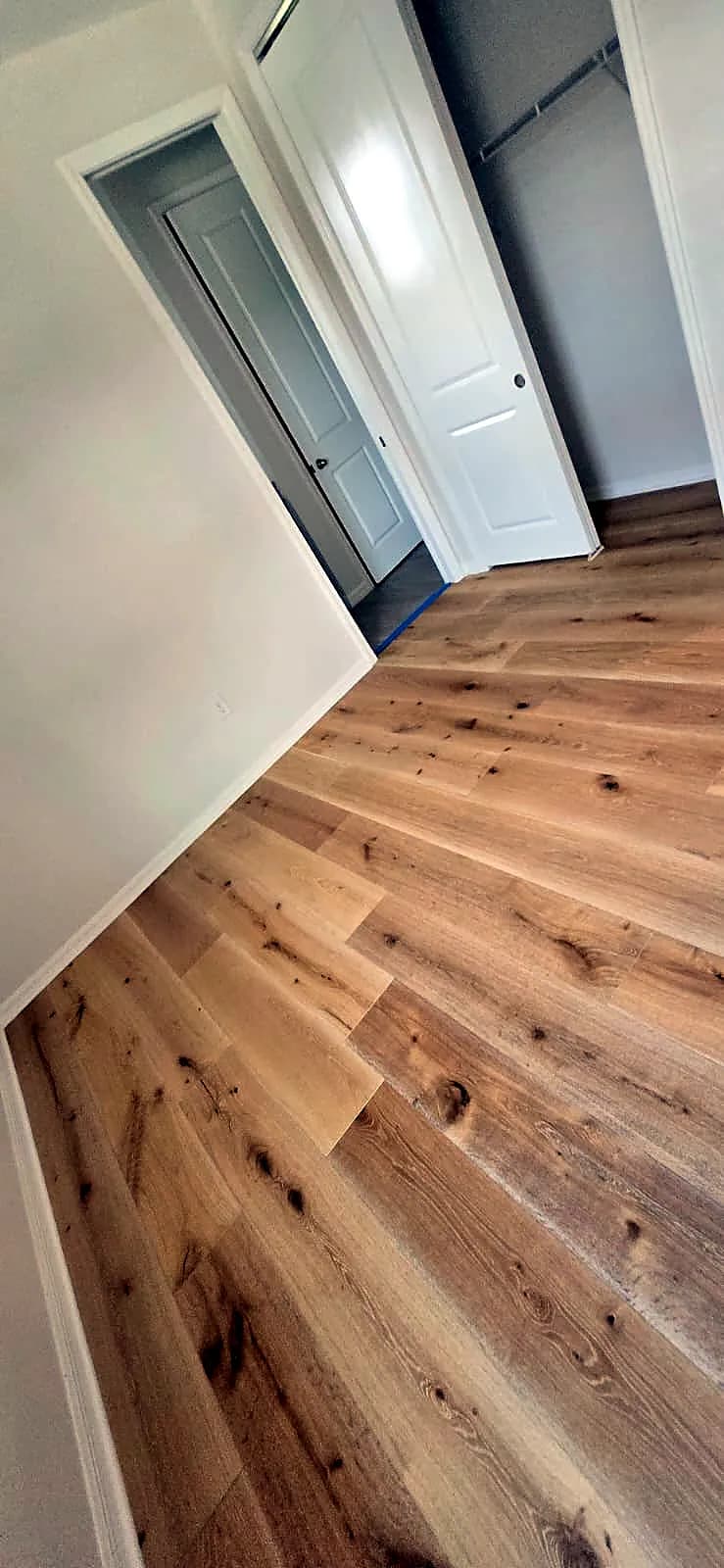
Hardwood-look flooring is one of the most requested upgrades in Central Florida homes, but the question that comes up almost every time is whether to go with solid hardwood or engineered hardwood. The two can look nearly identical once they are installed, yet they are built differently, and that difference matters a lot once you factor in Florida's concrete slabs, humidity, and summer storm season.
This guide breaks down how each option handles local conditions, the installation methods that go with them, how many times each can be refinished, what holds up best on stairs, and the price ranges most homeowners should expect to see. The goal is to help you walk into an in-person estimate already knowing which direction fits your home.
Why concrete slabs and humidity change the decision
Most houses built in and around Orlando sit on a concrete slab rather than a raised wood subfloor, especially newer construction in areas like Winter Garden, Clermont, and Ocoee. A slab is in constant contact with ground moisture, and Central Florida's humidity stays high for most of the year, with an extra load of moisture during summer storms and hurricane season. That combination matters because solid hardwood planks expand and contract with moisture more than engineered planks do.
Solid hardwood installed directly over or near a concrete slab is more likely to cup, gap, or buckle over time if moisture isn't controlled. Engineered hardwood is built in layers with the grain running in different directions, which makes it considerably more stable in exactly this kind of environment. That's a big part of why engineered hardwood installation has become the more common choice for slab homes across the Orlando area.
Older homes in neighborhoods like Winter Park sometimes have a wood subfloor rather than a slab, which opens up more flexibility, including solid hardwood nailed directly down. Either way, a subfloor needs to be properly prepped and leveled before any plank goes down, which is its own step in the process regardless of which product you choose.
Solid hardwood: the classic choice, with real limits in Florida
Solid hardwood is a single piece of wood, typically three-quarters of an inch thick, milled from one species top to bottom. It has a long track record and a traditional feel that a lot of homeowners want, and it can be sanded down to bare wood and refinished many times over its life since there is nothing but solid wood to work with.
The tradeoff in Florida is moisture sensitivity. Solid hardwood is generally not recommended directly over a concrete slab or in rooms with high moisture exposure, and it reacts more to the seasonal humidity swings that are normal here. It also typically requires a wood subfloor or a specific installation method to protect it from ground moisture, which adds cost and complexity on a slab home.
Engineered hardwood: built for slabs and humidity swings
Engineered hardwood has a real hardwood top layer bonded over several layers of plywood or high-density core material. From the surface, it looks like solid wood, including the grain and the texture, but the cross-layered construction underneath is what resists the expansion and contraction that humidity causes.
That stability is exactly why engineered hardwood installation works well over concrete slabs throughout Central Florida, in both older homes and new construction. It handles the area's humidity more predictably than solid hardwood, and it opens up installation methods, like floating and glue-down, that are not practical with solid wood over a slab.
The one tradeoff is refinishing life. Because only the top layer is real wood, engineered hardwood can usually be sanded and refinished, but fewer times than solid hardwood, and the number depends on how thick that top veneer is. A thicker wear layer gives more room to refinish down the road.
Glue-down, floating, or nail-down: how each gets installed
Nail-down installation drives the planks into a wood subfloor and is the traditional method for solid hardwood. It is not an option directly over a concrete slab, which rules it out for a lot of Central Florida homes unless there is a wood subfloor in place.
Glue-down installation bonds engineered hardwood planks directly to a properly prepped concrete slab using adhesive. It creates a solid, quiet feel underfoot and works well in slab homes, but it depends heavily on the subfloor being flat, clean, and leveled first, often with a self-leveling compound where the slab has low spots.
Floating installation clicks engineered planks together without nailing or gluing them to the subfloor, resting on a thin underlayment instead. It is typically the fastest and most forgiving method over a concrete slab, and it tolerates minor subfloor imperfections better than glue-down, though it can feel slightly less solid underfoot in comparison.
Which method makes sense for a given room depends on the subfloor condition, the specific product, and the area of the home, which is exactly what gets evaluated during an in-person estimate before any flooring is ordered.
Refinishing potential: how long each option can be renewed
Solid hardwood has the most refinishing life because the entire plank is wood. It can typically be sanded down and refinished multiple times over the years as the surface wears, scratches, or goes out of style with a different stain.
Engineered hardwood can also be refinished, but the number of times depends on the thickness of its top wear layer. A thin wear layer may only tolerate a light screen-and-coat rather than a full sand, while a thicker veneer holds up closer to solid wood. This is a good question to ask about any specific engineered product before installation.
Hardwood on stairs: what holds up best
Stairs see more direct foot traffic and impact than almost any other surface in the home, especially on the leading edge of each tread. Solid hardwood treads are a common choice because the thicker, uniform wood gives installers more to work with when shaping nosing and handling wear over time.
Engineered hardwood can also be used on stairs, and many homeowners choose it specifically to match engineered flooring installed on the floor above and below, keeping a consistent look from the upstairs hallway down through the staircase. The tread and riser construction matters more than the plank type here, which is a detail worth discussing before stairs are included in a project.
Typical cost ranges in Central Florida (with the usual caveats)
As a rough guide, many Central Florida homeowners see roughly similar per-square-foot ranges for engineered and solid hardwood material, with engineered sometimes landing a bit lower depending on the wear layer and finish quality. Installation cost on top of material shifts based on the method used, whether the existing floor needs to be removed first, and how much subfloor prep or leveling the slab needs before planks go down.
These are market-typical ranges, not a quote for any specific home. The only way to get an accurate number is an in-home estimate, where square footage, subfloor condition, and the rooms involved can all be seen directly rather than guessed at over the phone.
How to decide between the two
If the home sits on a concrete slab, which describes most of the newer construction around Winter Garden, Clermont, and the rest of the Orlando area, engineered hardwood is generally the more practical starting point because of how it handles humidity and allows glue-down or floating installation.
If the home has a solid wood subfloor, often true of older homes in areas like Winter Park, solid hardwood becomes a realistic option, particularly for a homeowner who values maximum refinishing life over the long run. Budget, the look you want on stairs, and how long you plan to stay in the home all factor into the final call as well.
An in-person estimate is still the most reliable way to land on the right choice, since it accounts for the actual subfloor, the specific rooms, and the humidity exposure of that home rather than a general rule of thumb.
Frequently asked questions
- Can solid hardwood be installed over a concrete slab in Florida?
- It is generally not recommended directly over a slab because of moisture exposure and humidity swings. Engineered hardwood is the more common choice for slab homes, since its layered construction resists expansion and contraction better than solid wood.
- Does engineered hardwood look different from solid hardwood once installed?
- Not usually. The top layer of engineered hardwood is real wood, so the grain, texture, and finish can look very close to solid hardwood once it is installed. The difference is in the construction underneath, not what you see on the surface.
- How many times can engineered hardwood be refinished?
- It depends on the thickness of the top wear layer. A thicker veneer allows more sanding over the years, while a thinner one may only support a light refresh rather than a full refinish. Solid hardwood generally allows more refinishing cycles overall.
- Is glue-down or floating installation better for a Florida home?
- Both work over a properly prepped concrete slab. Glue-down tends to feel more solid underfoot, while floating installation is typically faster and more forgiving of minor subfloor imperfections. The right method depends on the subfloor condition and the specific product.
- What does typical hardwood flooring cost in Central Florida?
- Costs vary with material, installation method, and how much subfloor prep is needed, so most homeowners see a range rather than one fixed number. An in-home estimate is the most accurate way to get a price for a specific project.
Found this helpful? Make us a preferred source on Google.
Ready for an exact price?
Tell us about your floors or the space you need cleaned and we will get back to you with an estimate.