
New Flooring Before Moving In: The Right Order of Work to Get It Move-In Ready
· By Marcos De Souza
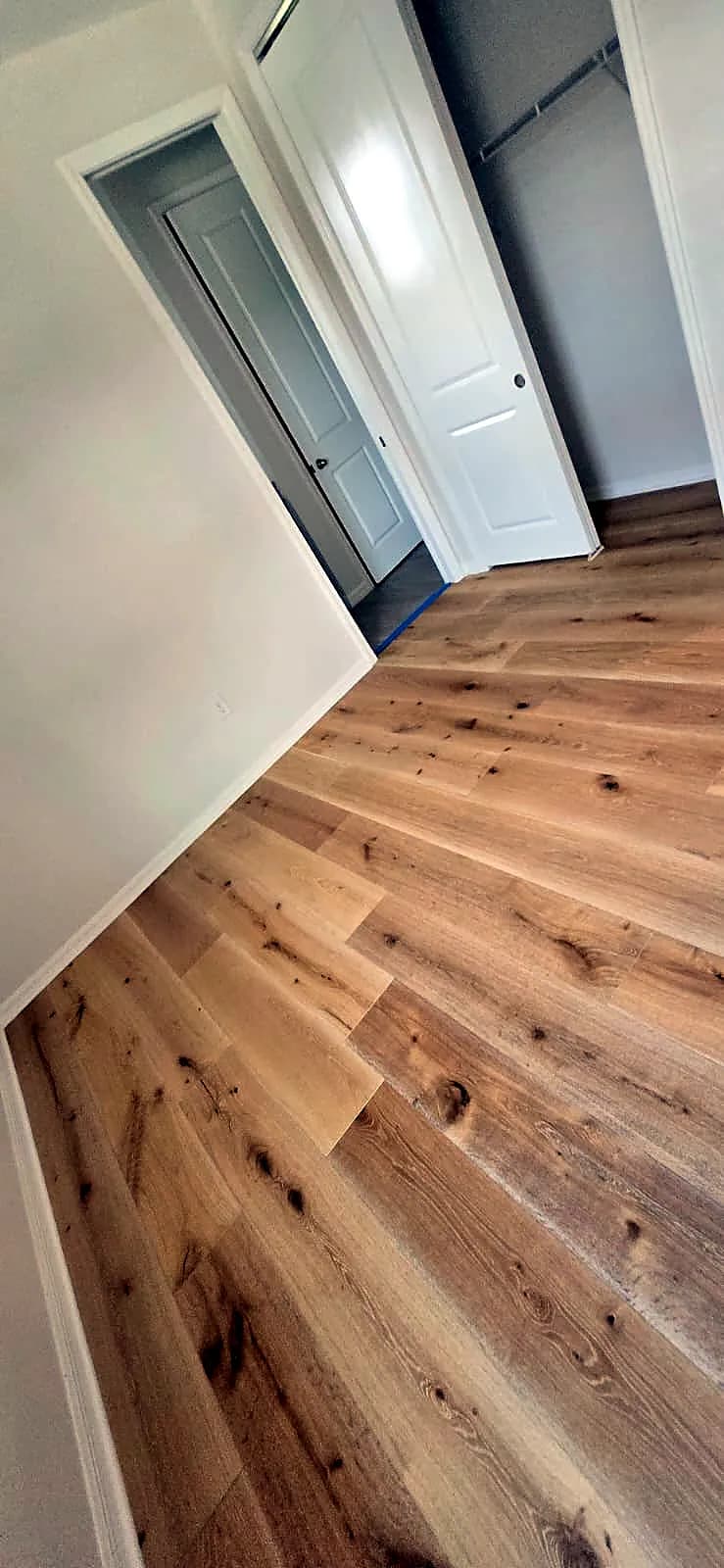
Replacing old carpet before moving in, or getting a rental ready for the next tenant, sounds simple until the schedule actually comes together. Flooring, furniture, and cleaning all touch the same rooms, and doing them out of order usually means redoing a step, working around boxes that should not be there yet, or handing over a space that still has dust in every corner.
This guide walks through the order that tends to work, from clearing the home out through the final clean, along with the general time each stage takes. Every home is different, so these are typical ranges to plan around rather than a fixed schedule, but the sequence itself holds true for most move-in or move-out flooring projects across Central Florida.
Why the order matters more than the calendar date
It is tempting to pick a move-in date first and work backward, but flooring and cleaning both depend on the room being empty and finished before the next step can start. Furniture sitting in a room blocks carpet removal. Carpet still down blocks subfloor prep. New flooring with baseboards half installed is not ready for a deep clean. Each stage needs the one before it fully done, not mostly done.
Setting the move-in or lease-start date around this sequence, instead of squeezing the sequence into a fixed date, is usually what keeps a flooring project from running into the week someone is supposed to be unpacking boxes or showing the unit to a new tenant.
Step 1: Clear the home before anything else
New flooring cannot go in around furniture, and old carpet is difficult to pull up safely with a dresser or bed frame sitting on top of it. The first real step is getting the rooms being redone completely empty, which for an occupied home often means a short window where furniture is staged in a garage, a pod, or rooms not being touched.
For a rental turning over between tenants, this step is usually simpler since the unit is already empty once the previous tenant moves out. Either way, nothing on the flooring side can start until the rooms are clear.
Step 2: Carpet removal and hauling it out
With the room empty, old carpet, padding, and the tack strips around the perimeter come out next. This step also typically includes hauling the old material out of the house, since it takes up real space and is not something to leave sitting in a hallway during the rest of the project.
A single room usually clears in well under a day. A full home with carpet in several bedrooms and a living area typically takes most of a day to strip and haul out, depending on how much square footage is involved.
Step 3: Subfloor prep, the step that decides how the floor holds up
Once the old flooring is gone, what is left underneath gets checked and prepped before anything new goes down. On a concrete slab, which is how most homes across Orlando and the surrounding area are built, this can mean grinding down high spots or pouring self-leveling compound into low spots so the new floor sits flat. On an upstairs plywood subfloor, it is more about re-securing loose panels and replacing any damaged sections.
This stage is also when moisture gets checked on a slab, since vinyl plank, laminate, and engineered hardwood all have limits on how much moisture the subfloor can hold before installation. It is easy to assume this step can be skipped on a newer home, but a slab that looks fine on the surface can still need leveling or testing before flooring goes down on top of it.
Step 4: Installing the new floor
With the subfloor flat, clean, and dry, installation of the hardwood, engineered wood, vinyl plank, or laminate can begin. How long this takes depends heavily on square footage, the layout of the rooms, and how much cutting is needed around closets, stairs, and doorways, so a single bedroom and a whole-home job are on very different timelines.
This is also the stage where things like transition strips between rooms and flooring types get set, which matters for how the finished space reads once furniture moves back in.
Step 5: Baseboards go in after the floor, not before
Baseboard installation happens after the new flooring is down, since the baseboard sits on top of the floor and covers the expansion gap left around the perimeter of the room. Installing baseboards before the floor is finished usually means redoing them, since the gap and the finished floor height need to be in place first.
This step also typically includes caulking and a coat of paint or touch-up where the baseboard meets the wall, which is a small detail that makes a real difference in how finished the room looks once everything else is done.
Step 6: The move-in or move-out clean comes last
Flooring and baseboard work generates dust, debris, and the occasional scuff mark on walls and other surfaces, even with a careful crew. That is why the deep clean belongs at the very end of the sequence rather than squeezed in before the last bit of trim work. A move-in or move-out clean typically covers floors, baseboards, cabinets, appliances inside and out, bathrooms, and windows, so the space is actually ready to live in or hand over rather than just finished construction-wise.
Having one team handle both the flooring and the cleaning side of a project, instead of coordinating two separate companies, tends to simplify this handoff since the people doing the final clean already know exactly what was just installed and what needs attention.
Putting a realistic timeline together
As a general range, a single room going from old carpet to a finished, cleaned floor often wraps up within a few days once subfloor prep is accounted for. A full home, especially one needing slab leveling or moisture testing in multiple rooms, typically stretches closer to a week or more from clear-out to final clean, though the real number depends on square footage and what the subfloor actually needs.
The only way to get a schedule that actually holds is an in-home look at the specific rooms, since subfloor condition is the variable that is hardest to predict from a phone call. Anyone planning a move-in or move-out deadline around new flooring is better off building in some buffer around that subfloor step rather than assuming the best case.
Frequently asked questions
- Can carpet removal and subfloor prep happen on the same day as installation?
- Sometimes, if the subfloor turns out to be in good shape and only needs a quick check. More often, grinding, leveling compound, or moisture testing need their own time, including cure time for leveling compound, before installation can start, so it is safer to plan them as separate steps rather than assuming a single-day turnaround.
- Do baseboards really need to wait until after the flooring is installed?
- Yes. The baseboard covers the expansion gap left around the edge of the room and sits on top of the finished floor height, so installing it before the floor is done usually means it has to come back off and go in again.
- How far in advance should new flooring be scheduled before a move-in date?
- It depends on how many rooms are involved and what the subfloor needs, which is best confirmed with an in-home estimate. As a general rule, building in buffer time around subfloor prep and the final clean, rather than scheduling everything back to back with no room for delay, tends to avoid a move-in date that gets pushed.
- Does a rental turnover between tenants follow the same order?
- Yes, the sequence is the same: clear the unit, remove old flooring, prep the subfloor, install, add baseboards, then clean. Rental turnovers are often faster to start since the unit is already empty, but the subfloor and installation steps still take the same general time as an occupied home.
- Is it worth using one company for both the flooring and the cleaning?
- It can simplify the schedule, since the same team handling the install already knows what was just done and what the final clean needs to cover, rather than coordinating the handoff between two separate companies on two separate schedules.
Found this helpful? Make us a preferred source on Google.
Ready for an exact price?
Tell us about your floors or the space you need cleaned and we will get back to you with an estimate.