Does Waterproof Laminate Flooring Actually Work in Florida Homes?
· By Marcos De Souza
"Waterproof laminate flooring" shows up everywhere once you start shopping for new floors, and in a place like Central Florida, where humidity is high most of the year and summer storms are routine, it sounds like exactly what a home needs. But the word on the box and what actually happens under a board for days at a time are two different things, and the gap between them is where a lot of homeowners get surprised after the floor is already down.
This guide breaks down what "waterproof" really means on a laminate product, the difference between a wiped-up spill and standing water, why a concrete slab in Florida changes the math, and the installation details that decide whether a waterproof laminate floor actually performs the way the label promises.
"Water-Resistant" vs "Waterproof": What the Label Actually Means
Flooring marketing uses "water-resistant" and "waterproof" almost interchangeably, but they describe different things. Water-resistant laminate slows down moisture absorption long enough for a spill to get wiped up without the board swelling. Waterproof laminate goes further: the core itself is built or treated so it resists swelling even with longer exposure, not just a quick splash.
What "waterproof laminate" almost never means is a fully sealed system the way some rigid vinyl plank products are. The core may resist water, but the seams between boards, the cut edges at a wall or doorway, and the underside resting on the subfloor are usually still the weak points. A product can be legitimately waterproof at the board level and still let moisture in at a seam if it is not installed with that in mind.
Surface Spills vs Standing Water: The Real-World Difference
Most waterproof laminate is genuinely good at the scenario it is designed for: a glass of water, a pet accident, a splash near the sink that gets dried within a reasonable amount of time. In that window, a quality waterproof core holds its shape and does not swell or discolor the way older laminate would.
Standing water for an extended period is a different situation. A slow leak under a refrigerator, an overflowing tub, a clogged AC condensate line, or water that pools after a hard summer storm finds its way in through a door threshold all expose the floor far longer than a spill ever would. Even a well-rated waterproof laminate can start to show problems at the seams and edges once water sits there for a day or more, because that is usually where the board-level water resistance stops being the deciding factor.
This is the honest way to think about it: treat "waterproof" as meaning "resists water much longer than a standard laminate," not "immune to water no matter how long it sits."
Why Florida's Humidity and Concrete Slabs Change the Equation
Most homes across the Orlando area, including newer construction in places like Winter Garden and Clermont, are built on a concrete slab rather than over a basement or crawlspace. That slab sits in contact with the ground, and in Central Florida's climate, moisture can move up through concrete even without any visible leak or flooding.
Add in ambient humidity that stays high for much of the year, plus air conditioning running heavily in summer and barely at all some winter days, and the flooring in a Florida home deals with more moisture cycling than the same product would in a drier climate. That does not make laminate a bad choice, but it does mean the installation has to account for moisture coming from below the floor, not just spills on top of it.
Where Waterproof Laminate Makes Sense in a Central Florida Home
Living rooms, bedrooms, hallways, home offices, and dining areas are a solid fit. These are spaces with occasional spills, foot traffic, and humidity exposure, but not direct, repeated contact with water, which is exactly what a waterproof laminate core is built to handle.
Kitchens are a reasonable use case too, as long as spills near the sink and dishwasher get wiped up in a normal amount of time rather than left to sit. Homes with kids or pets tend to do well with waterproof laminate in these rooms, since it holds up better than standard laminate against everyday accidents.
For a rental or investment property, say a home in the Kissimmee area that turns over between guests or tenants, the extra water resistance is a practical upgrade over standard laminate, since it tolerates the wear and occasional spills of frequent turnover better.
Where to Avoid It, Even If the Box Says Waterproof
Full bathrooms, laundry rooms, and the areas right around a tub, shower, or water heater are still a risk, even with a waterproof product. These rooms combine standing water potential with constant humidity, and that combination is where seams and edges are most likely to fail over time.
Entryways and mudrooms are worth a second thought in Florida specifically, since summer storms mean rain gets tracked in on shoes far more often than in drier climates. If a room regularly sees puddling water rather than the occasional splash, a fully waterproof vinyl plank or tile is usually the safer call, and that tradeoff is worth discussing before the materials are ordered.
Installation Details That Decide Whether It Actually Holds Up
The product matters, but the installation decides whether it performs. On a concrete slab, a proper vapor barrier under the laminate is one of the most important steps, since it blocks moisture that moves up through the slab from ever reaching the underside of the boards. Skipping it, or using a thin underlayment that was not built for a slab, undercuts a lot of what a waterproof core is supposed to deliver.
Expansion gaps around the perimeter of the room and at doorways also matter more in Florida than in a lot of other states. Laminate expands and contracts with humidity swings, and the heavy air conditioning cycles common here can push that movement further than homeowners expect. A gap that is too tight leads to buckling; a gap left unprotected can become an entry point for moisture.
Sealed edges finish the job: transition strips at doorways and kitchen or bathroom thresholds, and attention to where the flooring meets cabinets and baseboards, close off the places water is most likely to find its way under the boards. These are small details on an estimate, but they are usually the difference between a waterproof floor that lives up to the label and one that does not.
What a Waterproof Laminate Installation Typically Costs
As a rough guide, most Central Florida homeowners see roughly a few dollars per square foot for materials plus labor on a waterproof laminate installation, with the total shaped mostly by room size, how much of the existing flooring needs to come out first, and whether the concrete subfloor needs leveling before the new floor goes down.
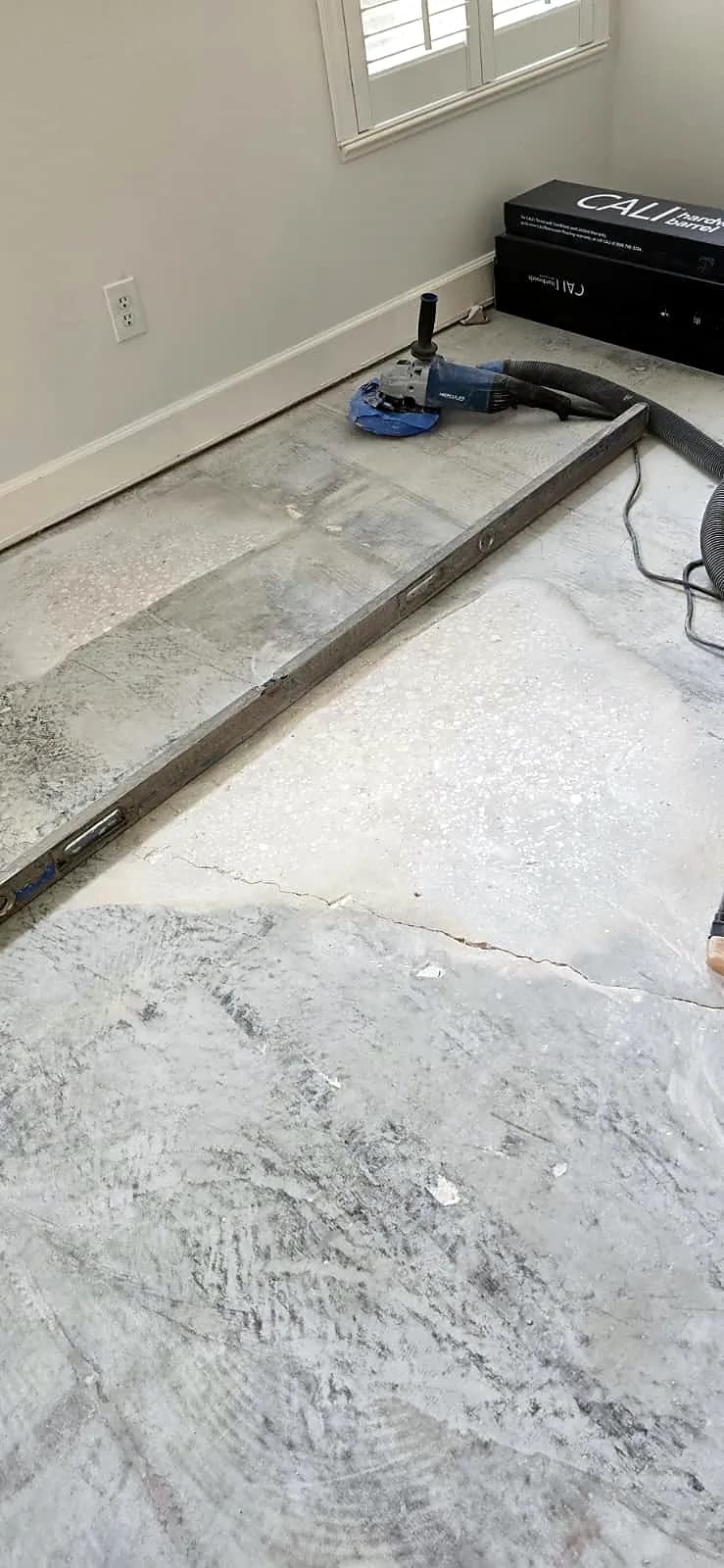
Subfloor prep is often the part that is easiest to underestimate. A slab with dips or unevenness may need a self-leveling compound before laminate can go in correctly, and that step adds to the total but protects the new floor from premature wear. The only way to get a number that reflects a specific home is an in-person estimate, where the actual square footage, subfloor condition, and layout can be measured.
Frequently asked questions
- Is waterproof laminate flooring really 100% waterproof?
- Not quite. A waterproof laminate core resists swelling far longer than a standard laminate, but the seams between boards and the cut edges at walls and doorways are usually still the weakest points. It is best understood as highly water-resistant rather than fully sealed against water the way some vinyl plank systems are.
- Can waterproof laminate handle a flood or a major leak?
- Not reliably. A waterproof core can tolerate a spill that sits for a while, but standing water from a flood, a burst pipe, or a leak left unnoticed for a day or more can still cause damage at the seams and edges, even on a well-rated product.
- Does waterproof laminate work well on a concrete slab in Central Florida?
- It can, but it needs a proper vapor barrier underneath. Most homes in the Orlando area sit on a concrete slab, and moisture can move up through the concrete even without a visible leak, so the installation has to account for that, not just for spills on top of the floor.
- Is waterproof laminate a good choice for a kitchen?
- Generally yes, as long as spills get wiped up in a normal amount of time. A full bathroom or laundry room is a bigger risk, since those spaces combine standing water potential with constant humidity.
- What installation detail matters most for waterproof laminate to actually hold up?
- A vapor barrier suited to a concrete slab, correct expansion gaps around the room and at doorways, and sealed transitions at thresholds and cabinets. These details, more than the product itself, decide whether the floor performs the way the waterproof label suggests.
Found this helpful? Make us a preferred source on Google.
Ready for an exact price?
Tell us about your floors or the space you need cleaned and we will get back to you with an estimate.